

Spain’s Valencia region raises its wealth-tax exemption to €2 million, removing payments for 84% of declarants and cutting revenue by €28 million.

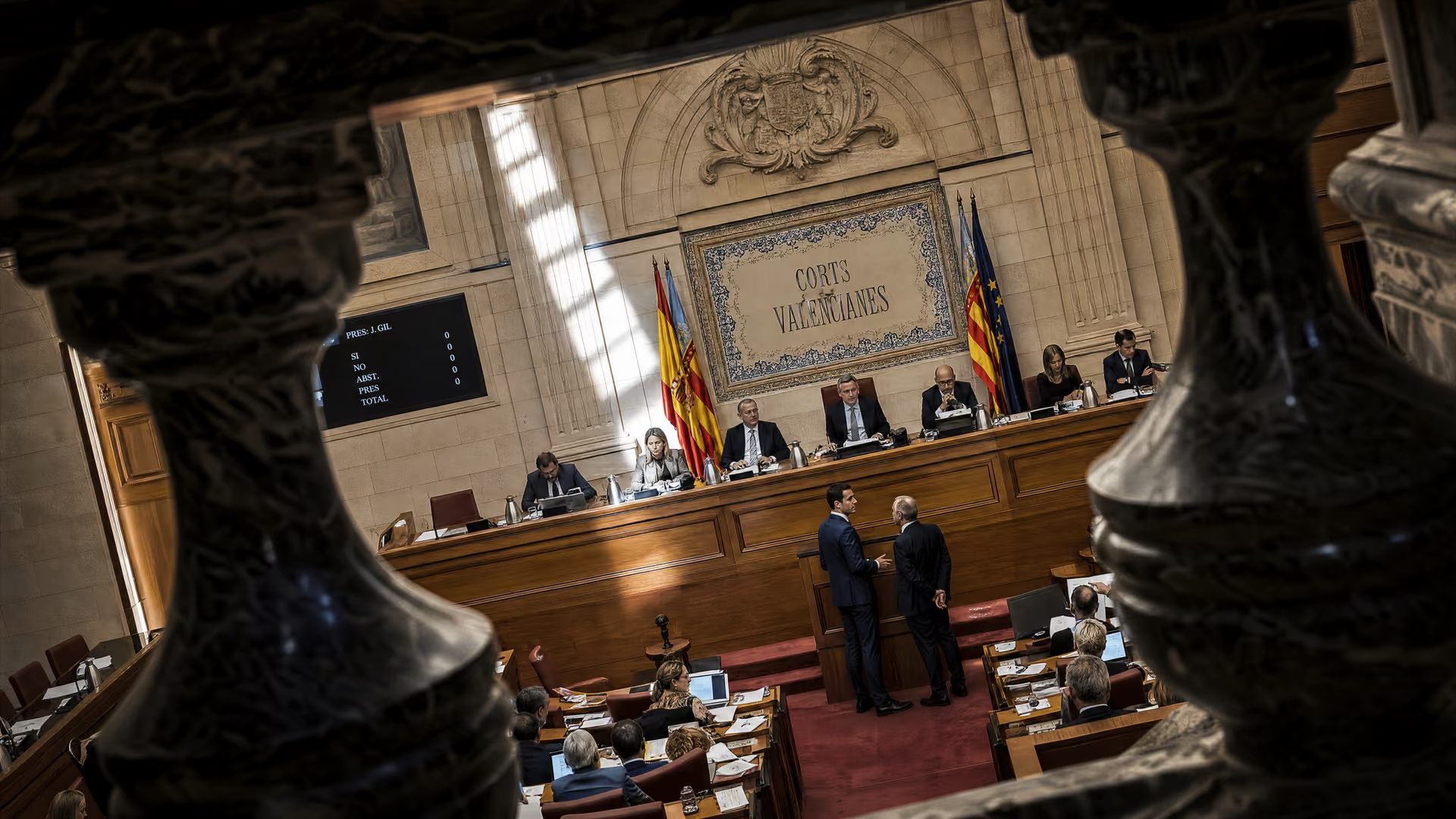
PP and Vox have raised Spain’s Valencian Community wealth-tax exemption to €2 million, a change that will remove the payment for 84% of declarants and reduce regional revenue by a further €28 million. The measure, agreed through a Vox amendment with the People’s Party and passed through the final parliamentary stage in the Corts Valencianes, extends a series of tax reductions aimed at the region’s highest-wealth taxpayers, according to the elDiario.es report on the Valencian tax reform.
The exemption now reaches €2 million
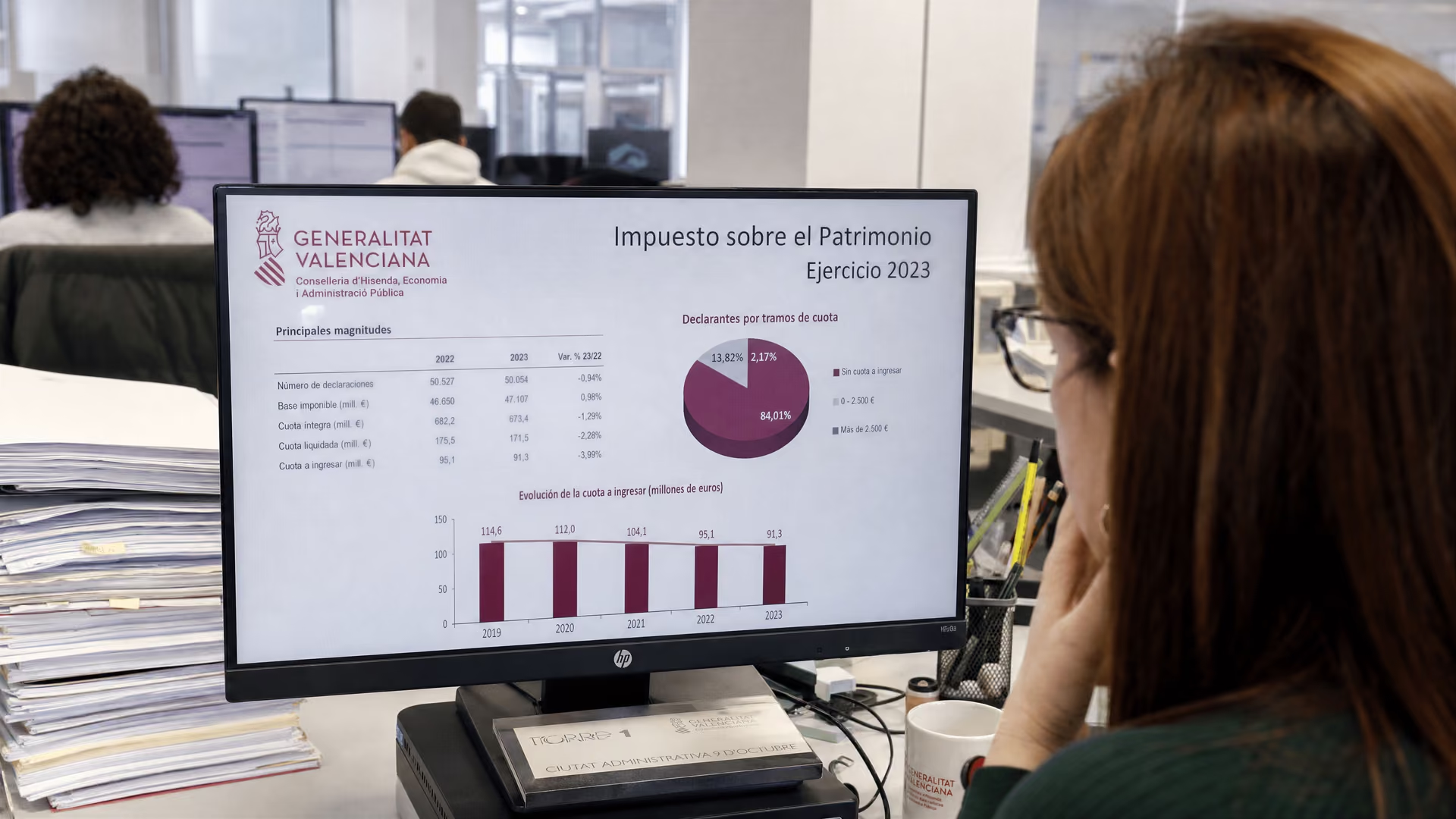
The new rule concerns people who declare more than €1 million in assets in the Valencian Community, excluding their main home and companies from the description of taxable wealth used in the report. The amendment lifts the minimum wealth-tax exemption from €1 million to €2 million. In practical terms, the Conselleria of Finance’s 2023 data indicates that 84% of people who filed a wealth-tax return will no longer pay the levy.
The regional impact is not limited to those removed from the tax. Taxpayers who remain liable will also be able to deduct the additional €2 million from their taxable base, reducing their bills. The immediate budgetary effect identified in the reporting is a further €28 million reduction in revenue for the Valencian Government.
The parliamentary setting is central to the change:
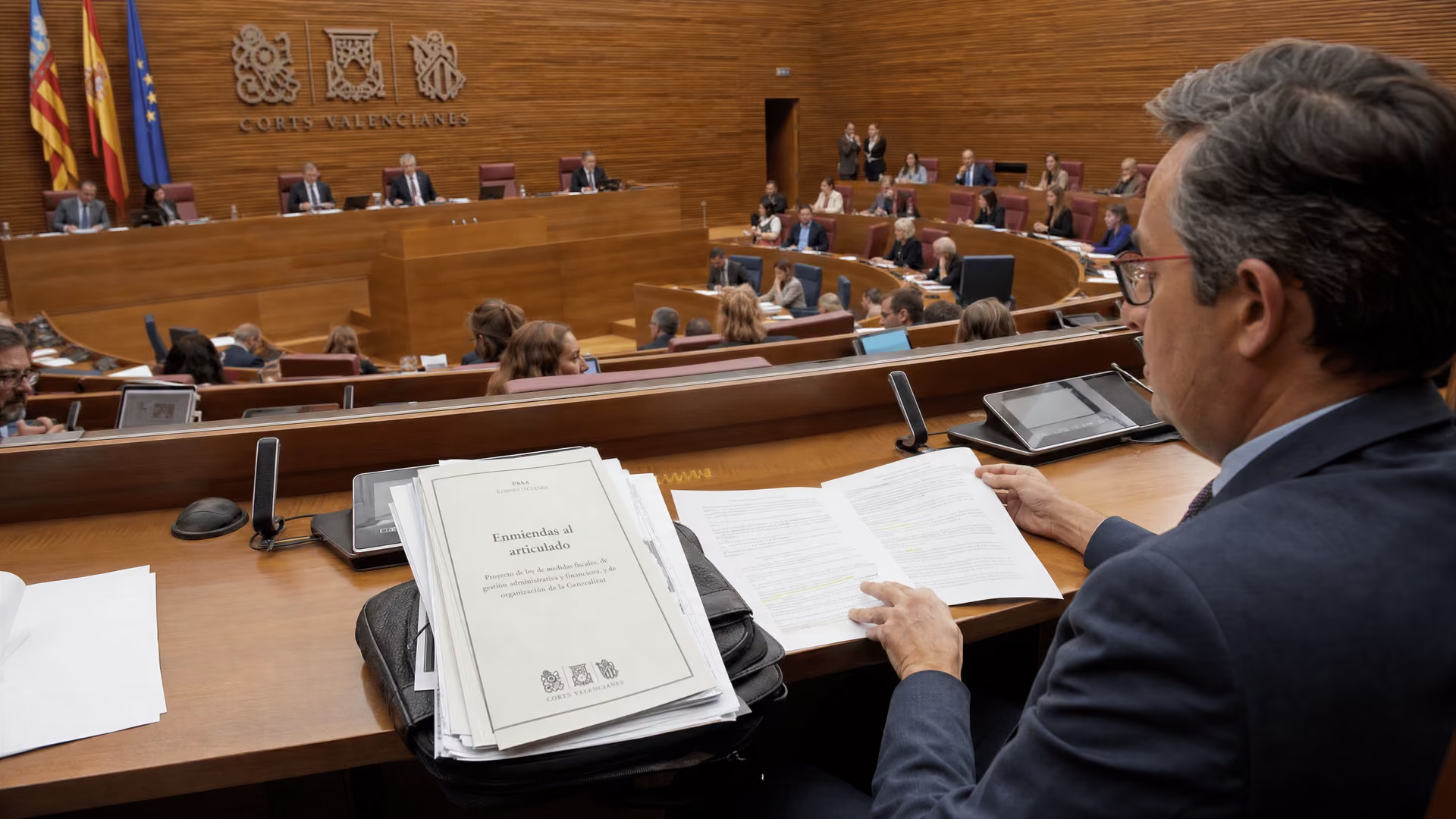
A second major increase under the PP-Vox government
The €2 million threshold is the latest step in a sequence of wealth-tax reductions since the People’s Party and Vox began governing the Valencian Community. Months before leaving office, Carlos Mazón agreed with Vox to raise the exemption from €500,000 to €1 million. The Conselleria of Finance then estimated the cost to the regional treasury at almost €62 million, and the earlier change meant that about half of wealth-tax contributors stopped paying.
The current president, Juanfran Pérez Llorca, has now followed that measure with the new increase, again with Vox’s support. The earlier reduction and the current amendment are therefore separate stages in the same policy direction. A previous account of the first PP-Vox wealth-tax reduction described how the initial change affected thousands of high-wealth taxpayers.
The sequence can be summarised in three stages:
- The exemption stood at €500,000 before the first PP-Vox increase described in the reporting.
- The earlier reform lifted it to €1 million and carried an estimated public-revenue impact of almost €62 million.
- The latest amendment raises the minimum exempt amount to €2 million and adds a further €28 million reduction, while also lowering the taxable base for those who continue paying.
The source describes the combined political direction as a broad reduction in taxation for large fortunes. It also reports that the Valencian Government has highlighted more than €630 million in claimed savings from inheritance and gift-tax measures during the legislature, alongside personal-income-tax reductions for people earning more than €100,000.
What the 2023 returns reveal about the tax base
The most detailed figures available in the report come from the Conselleria of Finance’s 2023 data. They show 27,711 wealth-tax returns, including 1,156 with no payment. The figures also illustrate how the tax burden was distributed among the bands that fall below the new €2 million exemption:
| Wealth band | Declarants | Tax paid collectively | Combined declared wealth | Source |
|---|---|---|---|---|
| €500,000 to €1 million | 13,307 | €10.3 million | €10.2 billion | Valencia wealth-tax report |
| €1 million to €1.5 million | 7,132 | €25.7 million | €8.931 billion | Valencia wealth-tax report |
| €1.5 million to €2 million | 3,001 | €26.4 million | €5.347 billion | Valencia wealth-tax report |
The three bands below €2 million generated different levels of collective payment in 2023:
Collective wealth-tax payments by asset band (EUR millions)
The report notes that the 13,307 people in the €500,000-to-€1 million band paid €10.3 million between them, an average of about €775 per person. The 7,132 declarants between €1 million and €1.5 million paid €25.7 million collectively, while the 3,001 people in the €1.5 million-to-€2 million band paid €26.4 million. Under the new threshold, the last of those bands will no longer pay the tax.
Which assets are already outside the calculation
The €2 million exemption does not operate in isolation. The wealth-tax framework already excludes or exempts several categories of assets, meaning that the amount assessed for the tax is not a simple measure of everything a person owns. The report identifies the following categories:
- The main home, exempt up to €300,000 for each declarant.
- Recognised artistic or historic assets.
- Assets linked to business or professional activity.
- Shareholdings in companies treated as family businesses.
The report also defines the large fortunes affected by the policy as people declaring more than €1 million in wealth without counting the home or companies. That distinction matters when reading the number of beneficiaries: the 84% figure refers to wealth-tax declarants under the Valencian system and its existing exclusions, not to every person whose total assets might exceed €2 million in an informal sense.
The practical effect is therefore broader than simply taking one group off the register. People with taxable wealth above the new threshold continue to benefit from the larger deduction, while those below it move out of payment altogether.
The administrative documents behind the reform are held by the Valencian finance authorities:
The political dispute is over priorities and public revenue
The reform has prompted a direct response from the Valencian Socialists. José Muñoz, the party’s spokesperson, said the policy showed that the People’s Party and Vox considered the interests of wealthy taxpayers their main priority. He argued that tax measures since 2023 had favoured the highest incomes and fortunes while public health, public education and social-protection services were deteriorating.
These tax cuts erode equality of opportunity and destroy social cohesion.
José Muñoz, Socialist spokesperson, as reported by elDiario.es
Muñoz described the reductions as a concealed tax amnesty for the richest residents and criticised the fact that the policy benefits a small share of the population. He placed the affected group at 0.5% of Valencians and contrasted it with the remaining 99.5%, referring to waiting lists, high pupil-to-teacher ratios, temporary school buildings and reductions in social benefits.
He also pointed to the combined declared wealth of the people affected by the reduction, which the report puts at €24.5 billion, while stressing that some other assets do not count for the tax. His argument is that the revenue loss should be assessed alongside the Generalitat’s responsibility for health, education and social services.
Those comments represent the opposition’s political assessment of the measure. The concrete fiscal facts are narrower: the new exemption is linked to an additional €28 million reduction in regional revenue, and the earlier increase from €500,000 to €1 million was associated with an estimated cost of almost €62 million.
The immediate fiscal effect is clear, while the wider outcome remains contested
The reporting distinguishes between the successive amounts involved. The earlier increase to a €1 million exemption carried an estimated impact of almost €62 million. The latest move to €2 million adds another €28 million in direct revenue reduction and lowers the taxable base for taxpayers who remain liable. Together, those figures explain why the reform is being presented as another substantial reduction in wealth-tax receipts.
The figures also show why the political dispute is focused on distribution rather than on the tax’s size for each individual taxpayer. In the lowest band reported, 13,307 declarants paid €10.3 million collectively, or roughly €775 each. The report characterises the effect on their fortunes as very small, while the higher bands contributed more collectively and are now affected differently by the new exemption.
For the Valencian Government, the change is part of a wider programme of tax reductions. For the opposition, the same programme represents a decision to give up revenue that could support public services. The available figures establish the scale of the waiver and the number of declarants affected, but they do not resolve that political disagreement.
The Valencian Community’s latest wealth-tax change gives the PP-Vox government a new, clearly measurable reduction for high-wealth taxpayers: the exemption now reaches €2 million, 84% of 2023 declarants are expected to stop paying, and regional revenue will fall by another €28 million. The continuing dispute is not about the mechanism, which is set out in the tax amendment, but about whether the Generalitat should retain that revenue or leave more of it with the region’s wealthiest taxpayers.
Sources
- Reducir daños del basuco exige enfrentar también la violencia (canamo.net)
- Irlanda busca destrabar el cáñamo industrial tras cultivar solo 11 hectáreas (canamo.net)
- PP y Vox vuelven a bajar impuestos a los ricos valencianos: perdonan más de 62 millones en Patrimonio a 8 de cada 10 (eldiario.es)
- Cuentas sin alma: la trampa ideológica en los presupuestos de la Generalitat (eldiario.es)
- ¿Qué tiempo hará el domingo 2 de agosto en la Comunitat Valenciana? (lasprovincias.es)
- Declarados tres incendios en zonas afectadas por tormentas eléctricas en el interior de Valencia (lasprovincias.es)
- José Mª García (SETT): "Valencia tiene oportunidades para ser un gran 'hub' europeo de fotónica" (valenciaplaza.com)
- La Generalitat desplegará un plan para eliminar datos duplicados y preparar sus bases para la IA (valenciaplaza.com)
- Cannabis club in Dénia ‘caught selling drugs illegally to tourists’: Six arrested (thespanisheye.com)
- Cannabis club in Dénia used for selling drugs dismantled (diariodealicante.net)