

How the US drug war destroyed Colombia’s 1970s marijuana boom, reshaped Sierra Nevada communities and helped create the cocaine cartels.

Washington’s drug war destroyed Colombia’s 1970s marijuana boom—an economy on which an estimated 80% of peasants in the Sierra Nevada and La Guajira depended by 1975—and helped clear the way for the cocaine cartels that replaced it, according to an El Planteo account of Colombia’s marimbera bonanza. The story begins in the rural communities around Santa Marta, where cannabis cultivation transformed an isolated agricultural frontier before prohibition and US repression brought the trade down. For readers in Valencia, the history is a reminder that cannabis policy is shaped not only by cultivation and consumption, but also by the cross-border decisions that determine which economies survive.
The boom that remade Colombia’s Sierra Nevada
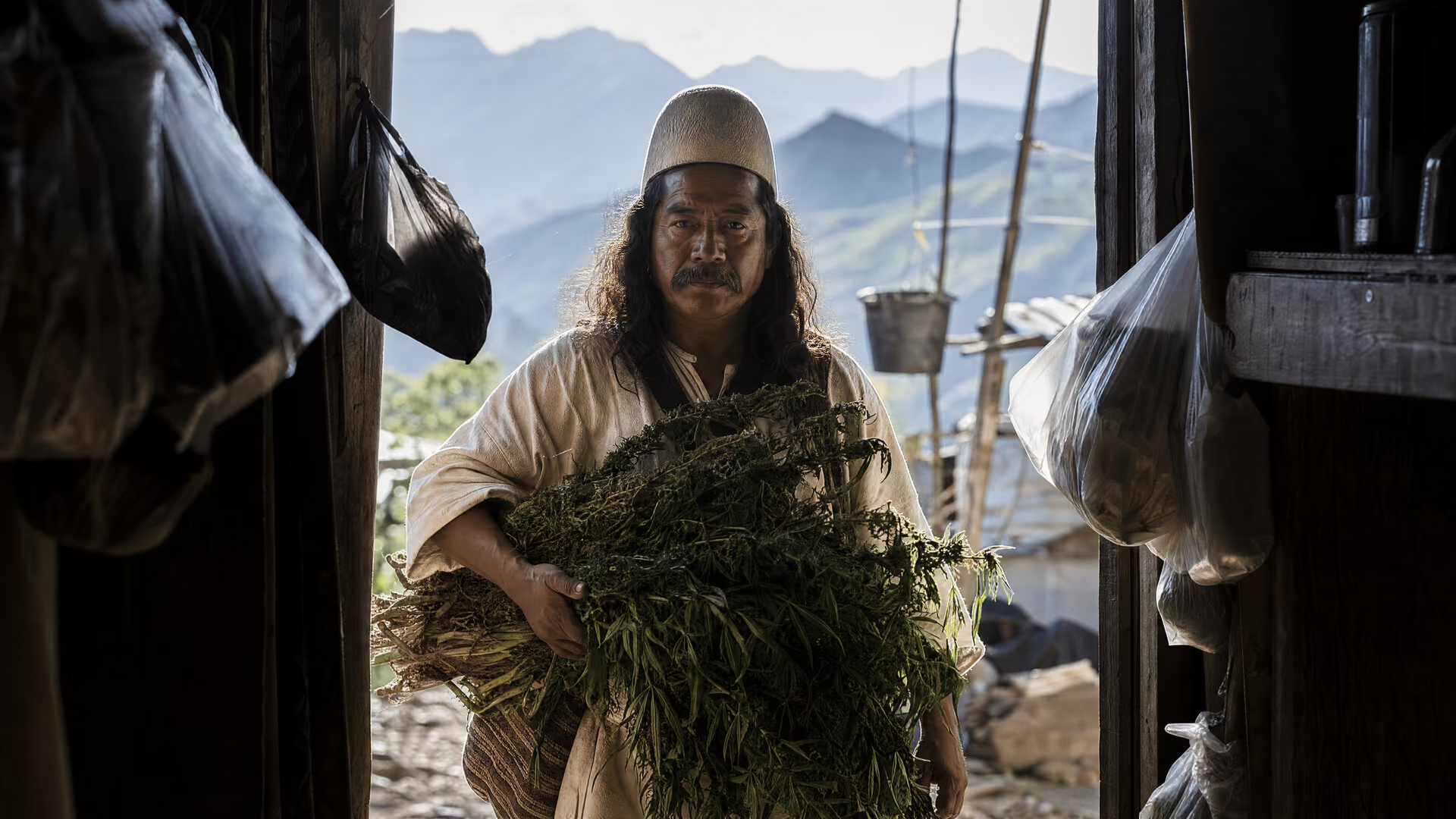
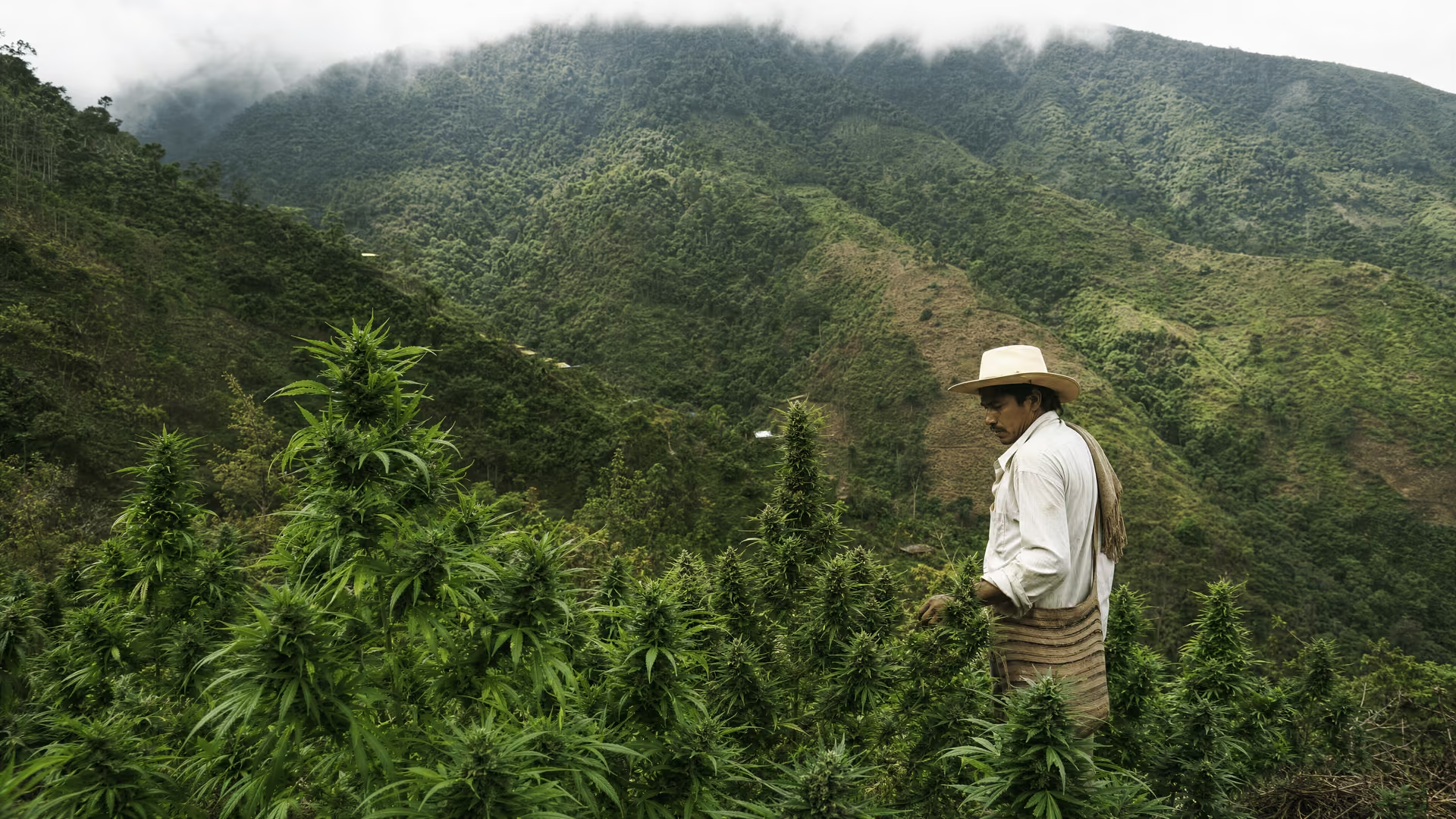
At the end of the 1960s and throughout the 1970s, the Sierra Nevada de Santa Marta became the centre of Colombia’s first major cannabis export economy. Before that transformation, the region was a relatively isolated agricultural frontier where families grew maize, plantains and coffee. The arrival of North American demand turned those slopes into the source of a trade that reached far beyond the Caribbean coast.
The trade was driven by a convergence of circumstances rather than a single planned development. The US counterculture, opposition to the Vietnam War and the growing appetite of consumers in developed countries created demand. Colombian farmers, foreign volunteers, adventurers and young Americans seeking alternatives to military service or conventional life shared growing methods, exchanged seeds and developed distribution channels. The main forces behind the bonanza were:
- A rural population with farming experience and access to Sierra Nevada land.
- North American demand linked to the counterculture and anti-war movement.
- Informal exchanges of cultivation knowledge and seeds.
- Transport networks connecting Santa Marta and Barranquilla with Miami and New York.
- The search by Colombian families for income after the decline of banana plantations.
The geography behind that history remains central to the account:
Marijuana moved north in large quantities through boats, trucks and aircraft. In communities around Santa Marta and Barranquilla, the trade connected small farms to distant cities and foreign buyers. It also gave the people involved a regional name: marimberos, referring to those who cultivated, transported or traded the crop. The term became more than a description of work. It developed into an identity associated with the money, social mobility and confidence brought by the bonanza.
From abandoned plantations to a rural cash economy
The economic effect was especially significant for families whose relationship with the United Fruit Company had been marked by poverty and exploitation. After the company left its banana plantations in the area, small farmers found that cannabis money could provide an income the former plantation economy no longer offered. The result was a rapid redistribution of money from overseas consumers, smugglers and urban markets into lower- and middle-income Colombian communities.
The boom did not simply enrich individuals. The source describes towns around Santa Marta and the Sierra Nevada as experiencing unprecedented growth and prosperity. Farming families became central actors in a transnational economy, while the marimbero occupation acquired its own social status. The available account places the scale of that dependence in stark terms:
| Period | Development | Local consequence | Source |
|---|---|---|---|
| Late 1960s | The Sierra Nevada shifted from a mixed farming frontier toward cannabis production. | A new rural export economy began to form. | El Planteo’s Colombia bonanza report |
| 1970s | Cannabis moved from Santa Marta and Barranquilla toward Miami and New York. | Farmers, transporters and regional traders gained access to foreign money. | El Planteo’s Colombia bonanza report |
| 1975 | The Sierra and La Guajira economy was estimated to depend heavily on cannabis cultivation. | As many as 80% of peasants were reported as dependent on the crop. | El Planteo’s Colombia bonanza report |
| After the crackdown | Washington’s drug war and US repression destroyed the marijuana commerce. | Cocaine cartels emerged as the trade that replaced it. | El Planteo’s Colombia bonanza report |
Three figures capture the scale and historical reach of the period:
Those figures should not be read as evidence of a stable or formalised legal industry. The bonanza was an informal cross-border trade exposed to foreign enforcement decisions. Its dependence on overseas demand created wealth in the Sierra Nevada, but it also left local communities vulnerable to a policy reversal made largely outside Colombia.
How Washington’s drug war changed the trade
The central argument of the El Planteo report is a sequence: the United States helped create the market that made the marimbera bonanza possible, then Washington’s prohibitionist drug war and repression destroyed that commerce. The same account says the cocaine cartels that followed did not emerge in an unrelated story; they replaced the marijuana economy after the crackdown.
That distinction matters. The history is not presented as a simple tale in which Colombia moved naturally from one export crop to another. It is a story of an economy shaped by external demand and then disrupted by external policy. The Sierra Nevada’s farmers had developed a livelihood around an international market, but the decision to intensify prohibition changed the value and viability of that livelihood without removing the pressures that had made illicit trade attractive.
The consequences were severe. The source describes the changing landscape as the setting for one of the most violent and cruel chapters in the history of drug prohibition. It also presents the rise of cocaine trafficking as part of the same transformation: when the marijuana trade was destroyed, a more powerful and more violent criminal economy took its place.
The route that connected the region to foreign markets can be visualised as a network rather than a single farm or town:
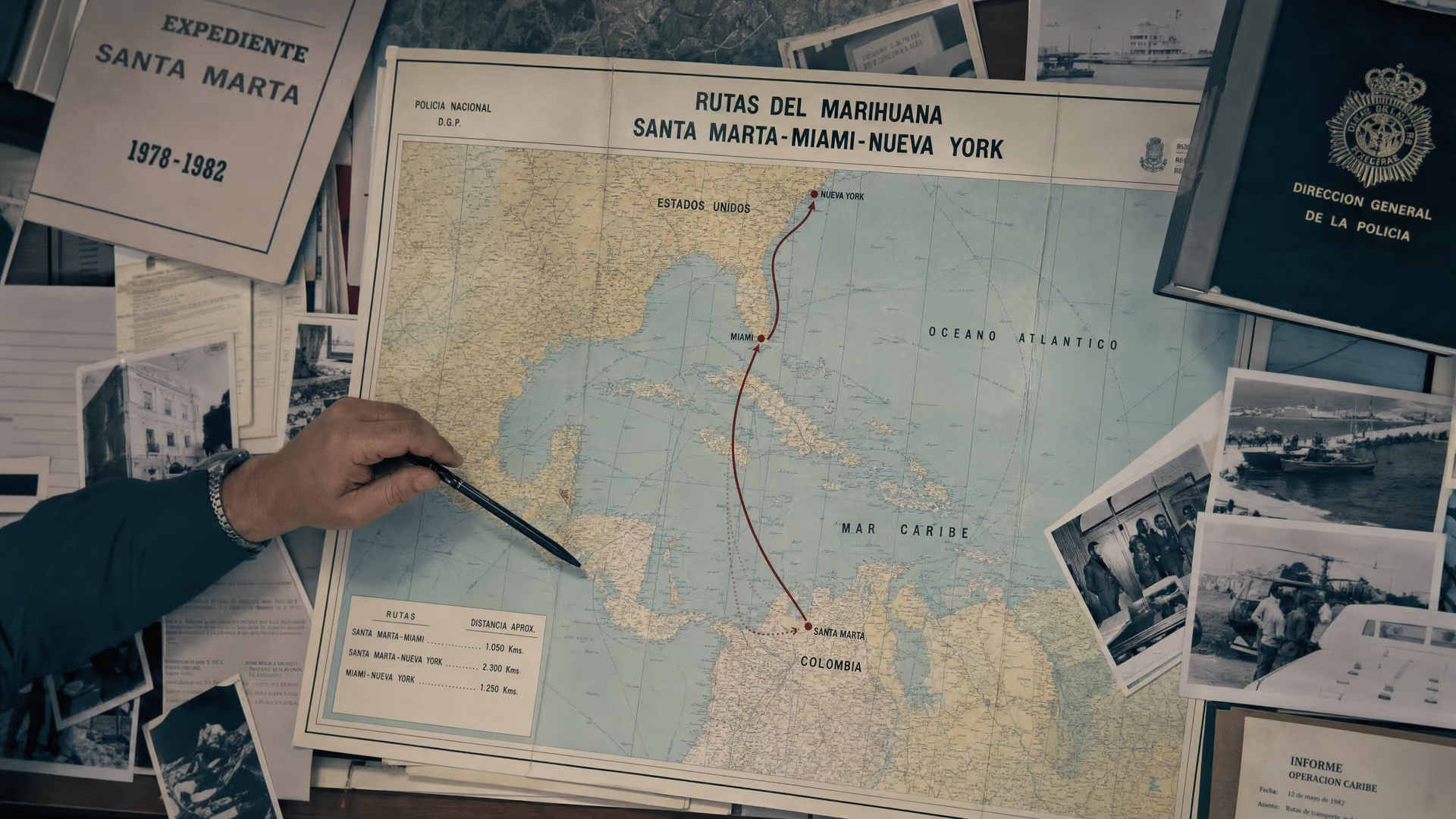
The supplied account does not provide a detailed list of individual US operations, statutes or enforcement dates. Its historical claim is narrower and more concrete: Washington’s drug war ended the Colombian marijuana boom and contributed to the creation of the cocaine cartels that replaced it. That is the chain at the heart of the documentary and the source article.
Prosperity, agrarian politics and the marimbero identity
The bonanza also unfolded alongside Colombia’s rural political tensions. As money entered communities near Santa Marta and the Sierra Nevada, debates over agrarian reform were growing and peasant unions were advancing into territories left behind by the plantation economy. The cannabis trade therefore intersected with questions about land, work and who had the right to benefit from rural production.
For small farmers, the income represented a break from older forms of dependence. The source describes families who had spent years trapped in poverty and exploitation connected to the United Fruit Company, then found new earning power through cultivation and trade. That change helped explain why the marimbero identity carried pride as well as risk. It represented a profession created by local people, even though the market itself depended on consumers and policy decisions abroad.
Being a marimbero became an identity, a way of life and a source of pride.
El Planteo’s account of the Colombian bonanza
This social dimension is important when assessing what was lost. The crackdown did not merely close a supply route. It disrupted a rural economy that had altered family incomes, community status and the balance between farmers and former plantation interests. The violence that followed was therefore imposed on a region already undergoing rapid economic and political change.
The history also complicates the language used to describe the people involved. The word marimbero became a regional term for cultivators, carriers and traders, not just a label for organised criminal figures. That does not remove the illicit nature of the trade, but it shows how deeply the economy had entered everyday life in the communities that sustained it.
A documentary connects the bonanza to Colombia’s present
The history is the subject of El Corazón del Mundo, an upcoming documentary produced by Lucas Nosiglia and directed by Guido Mignogna, which is due to be presented in 2026. The film follows the transformation of the Sierra Nevada from an agricultural frontier into the centre of a global cannabis trade, then into a landscape marked by the violence of prohibition. The source also links that history to a current resurgence of cannabis production in Colombia.
Nosiglia is described as working with cannabis figure Sergio Puerta on initiatives intended to revitalise the region’s cannabis culture and production. That present-day work is framed as an attempt to reconnect Colombia with a history that was not simply erased when the bonanza ended. It also places the documentary in a live debate about whether prohibition solved the problems associated with the trade or helped redirect them.
Recent reporting suggests that the wider drug-war question remains unresolved. A July 2026 Washington Post report on US operations and cocaine shipments said military operations had not significantly reduced cocaine entering the United States, while coca cultivation and cocaine production in Colombia and elsewhere in South America had increased. The report concerns the contemporary cocaine trade rather than the 1970s bonanza, but it reinforces the documentary’s broader question about the results of enforcement.
Colombia’s current political relationship with the United States also remains tied to counternarcotics policy. In a separate Reuters report on Petro and Trump’s anti-drug discussions, Colombian President Gustavo Petro discussed cooperation, voluntary coca eradication and efforts to reduce cocaine production with US President Donald Trump. Those discussions show that the policy relationship which shaped the earlier period still influences Colombia’s choices today.
What Colombia’s history means for readers in Valencia
For readers in Valencia and its province, the Colombian story should not be confused with Spain’s private cannabis social-club framework. Valencia cannabis social clubs are private, members-only, non-profit associations under Spanish law. They are not shops, dispensaries or public venues, and they are not open automatically to visitors or tourists.
That local distinction matters because the Colombian bonanza was an illicit export economy built around international demand and later reshaped by US-Colombian drug-war policy. Valencia’s members-only associations exist within a different Spanish legal and social setting. The useful connection is not access or commerce, but the policy lesson: when governments change the rules around a crop or market, the economic and social consequences can reach far beyond the original prohibition.
The main points of the Colombian account are:
Colombia’s marimbera bonanza was a rural economic transformation created by local farming skill, foreign demand and an unusual political moment. Its collapse shows how prohibition can redirect rather than eliminate an illicit market: Washington’s repression ended the marijuana trade described in the source, while cocaine cartels emerged from the violent transition that followed. The history now being revisited through El Corazón del Mundo remains relevant wherever policymakers assess the consequences of drug enforcement.