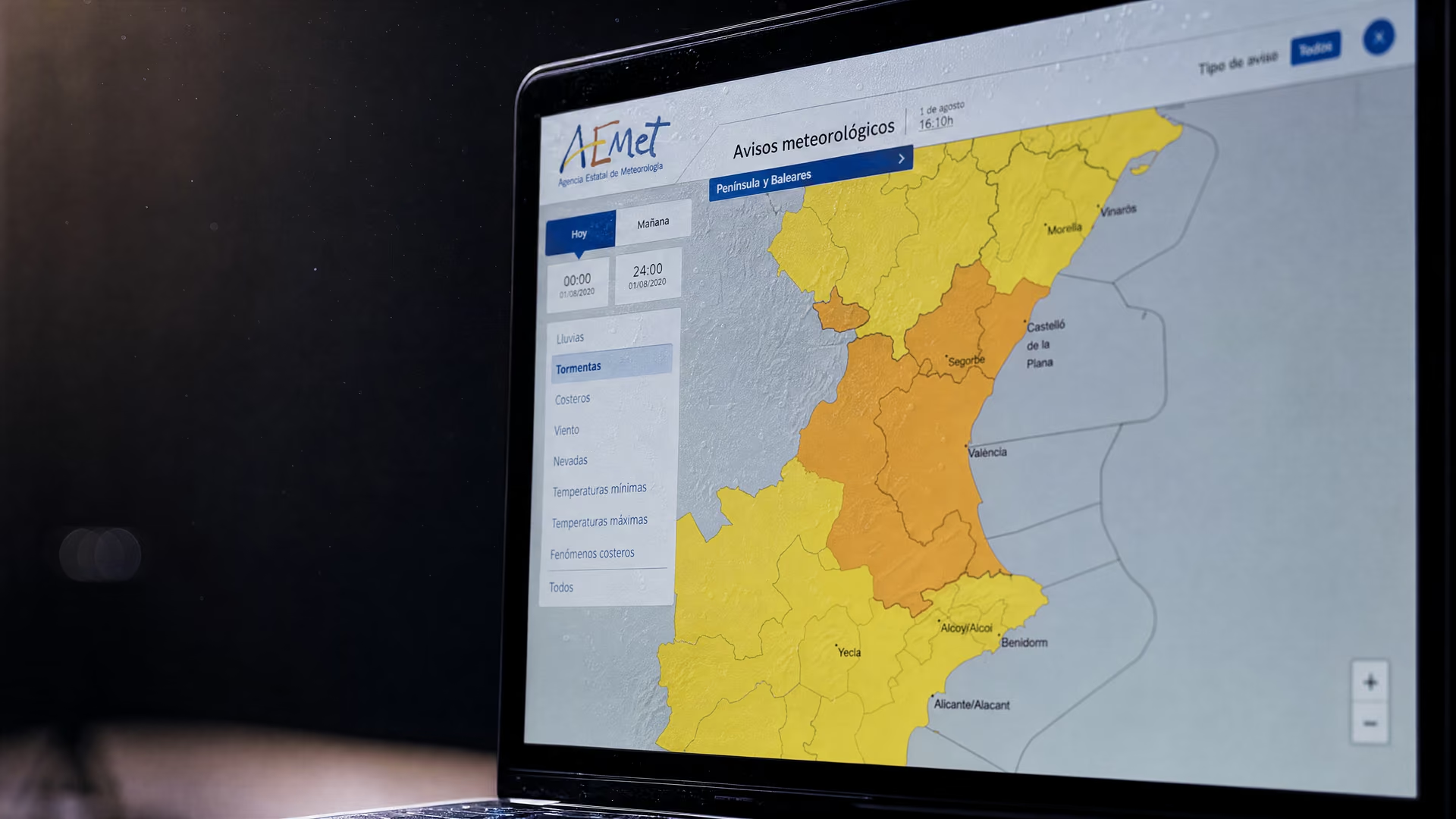



Spain's AEMET has issued an orange storm warning for the Valencian Community, with hail and very strong winds forecast on 1 August.

Spain's State Meteorological Agency (AEMET) activated a double orange storm warning across parts of the Valencian Community from 16:00 to 22:00 on Saturday, 1 August, forecasting hail and very strong wind gusts in Valencia and Castellón. The warning picture also includes yellow alerts in parts of Alicante and a wider rain advisory, according to the AEMET storm warning report published by Las Provincias.
AEMET activates the orange warning for Saturday storms
The Agencia Estatal de Meteorología, Spain's national weather agency, said the most significant storm activity was expected during the afternoon and evening. Its forecast identified the northern part of Castellón, the southern part of Valencia province and Alicante as the main areas where showers could develop alongside thunderstorms, hail and very strong gusts.
The orange level applies when the danger is considered important. AEMET warns that exposed property and vulnerable people in affected areas could suffer serious impacts. The agency's assessment does not mean that every location in the Valencian Community will experience the same conditions; the warning is divided by province, geography and hazard level.
The warning was set to remain active for a defined six-hour period, from 16:00 until 22:00 on Saturday 1 August. That timing placed the forecast risk in the afternoon and early evening, when the agency expected the most notable storm development.
The forecast came while maximum temperatures were still expected to remain significantly high. In practical terms, the warning combined continued heat with the possibility of rapidly developing storms, hail and sudden wind changes rather than describing a general deterioration across the entire region.
A meteorologist's workstation displaying the Valencian Community warning map would show the geographic split behind the alert:
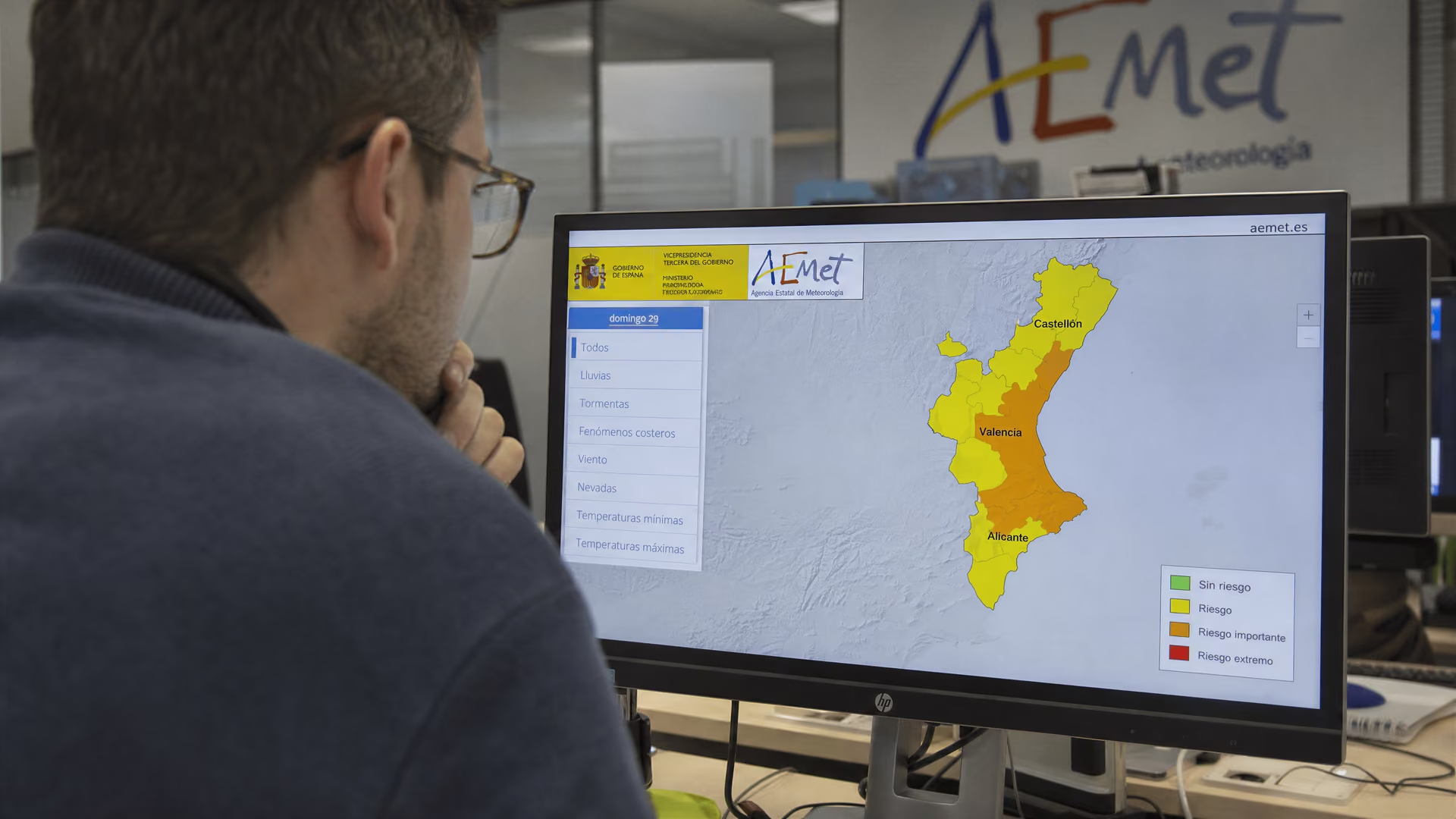
Warning levels vary across the three Valencian provinces
The alerts covered all three provinces of the Valencian Community, but the orange level was concentrated in particular areas of Valencia and Castellón. Alicante was included in the storm warning picture at yellow level, while parts of Valencia and Castellón also had yellow warnings for neighbouring coastal or inland areas.
The geographic breakdown reported by Las Provincias is as follows:
| Warning area | Provinces and locations listed | Forecast risk | Source |
|---|---|---|---|
| Orange warning | Northern and southern inland Valencia; southern Valencia coast; northern inland Castellón | Thunderstorms, hail that could be large, and very strong gusts | AEMET orange warning report |
| Yellow warning for storms | Southern Valencia coast; northern Castellón coast; inland and southern coast of Alicante | Storms, locally heavy showers, hail and possible very strong gusts | AEMET orange warning report |
| Yellow warning for rain | Broad areas of the Valencian Community | Accumulations of up to 20 litres per square metre in one hour | AEMET orange warning report |
The source lists a yellow storm warning for the southern Valencia coast alongside the orange warning covering that province. The safest reading is to follow the specific warning attached to the relevant hazard and location, rather than treating the entire coastline or province as one uniform risk area.
For readers checking the forecast by province, the main distinctions are these:
- Valencia province had orange storm warnings for inland areas and the southern coast, with an additional yellow storm listing for the southern coast.
- Castellón province had an orange storm warning in the northern interior and a yellow warning along the northern coast.
- Alicante province had yellow storm warnings for inland areas and the southern coast.
- Rain warnings extended across broad parts of the Valencian Community, with possible hourly accumulations of 20 litres per square metre.
Hail, wind and heavy showers are the main forecast risks
AEMET's forecast focused on the combination of storm cells, hail and wind rather than on rainfall alone. The agency said hail could accompany the showers and did not rule out large hail in the orange-warning areas. Very strong gusts were also considered likely in the areas under the higher warning level.
The rain warning added a separate concern. Broad areas could record 20 litres per square metre in one hour, while the yellow storm warnings referred to showers that could be locally heavy. These figures describe forecast thresholds or expected accumulations, not a guarantee that every location within a warning zone would receive the same amount.
The agency's public advice was direct:
Be prepared. Take precautions and stay informed of the latest weather forecast.
Agencia Estatal de Meteorología (AEMET), translated from the source
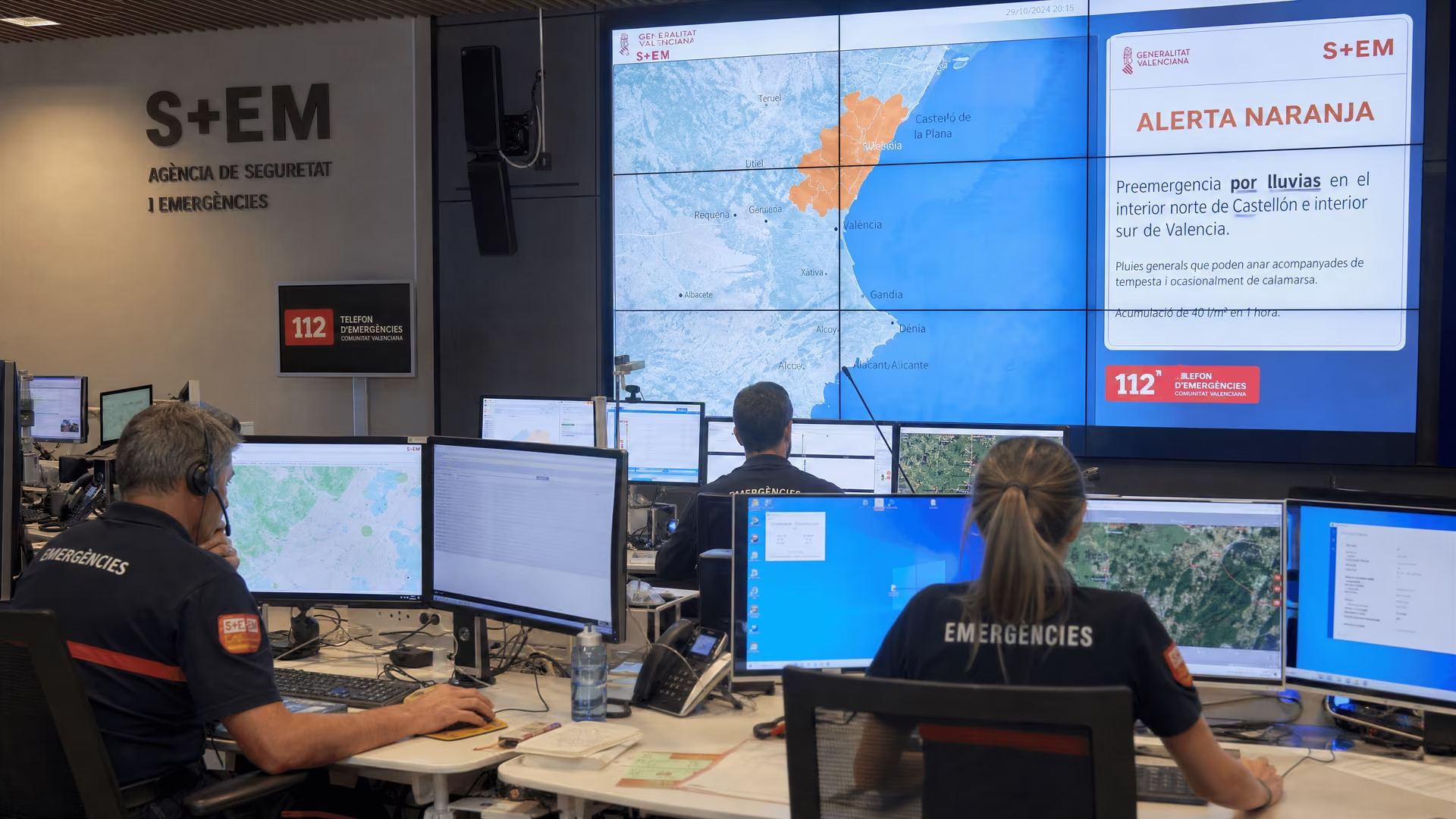
The Generalitat also activates its emergency alert
Emergències de la Generalitat Valenciana also activated an orange storm alert for the northern interior of Castellón and for the interior and southern coast of Valencia. The regional alert means that the forecast was being addressed not only through AEMET's national meteorological warning system but also through the Valencian emergency services.
That distinction matters because AEMET provides the meteorological assessment, while the Generalitat Valenciana is responsible for coordinating regional emergency information and response. The two alerts described in the source therefore concern the same forecast situation from different institutional roles.
The storm forecast also formed part of a wider day of weather-related incidents in the province. A separate report said three fires had been declared in areas affected by electrical storms in the interior of Valencia, including the municipalities of Quesa, Cortes de Pallás and Requena, in the Hoces de Cabriel. That report does not establish that every fire was caused by the forecast conditions, but it shows why official updates remained important as storms moved through inland areas.
A regional emergency operations room monitoring warnings and incident reports provides the most concrete visual reference for this part of the story:
The reported fires underline the difference between a forecast hazard and a confirmed incident. AEMET's warning described what could happen in exposed locations; the later incident report documented events that had already been declared in specific inland municipalities.
What residents should follow as conditions develop
The immediate issue for residents was the short period in which the highest storm risk was expected: Saturday afternoon and evening. Because the warning levels differed between inland and coastal areas, the relevant provincial and municipal forecast was more useful than a single region-wide description.
AEMET specifically advised people to take precautions and remain informed through the latest meteorological updates. The Generalitat Valenciana's emergency alert provided a second official channel for information in the areas it identified, particularly the northern interior of Castellón and the interior and southern coast of Valencia.
The warning should also be read alongside the possibility that conditions could change quickly. Hail, very strong gusts and locally heavy showers were all included in the forecast, while high maximum temperatures were expected to continue. The combination meant that a location could remain hot before a storm developed, rather than the alert signalling an immediate, uniform change across the whole Community.
Questions about the Valencian storm warning
When was the orange warning active?
AEMET activated the warning from 16:00 to 22:00 on Saturday 1 August 2026.
Which areas received the orange warning?
The orange storm warnings covered the northern and southern inland areas and the southern coast of Valencia province, as well as the northern interior of Castellón.
What conditions were forecast?
AEMET forecast thunderstorms and showers that could bring hail, potentially large hail in orange-warning areas, very strong wind gusts and locally heavy rainfall.
Was Alicante under an orange warning?
The source listed inland areas and the southern coast of Alicante under a yellow storm warning, not an orange one.
How much rain could fall?
Yellow rain warnings covering broad areas of the Valencian Community allowed for accumulations of up to 20 litres per square metre in one hour.
For Valencia, Castellón and Alicante, the practical message from the official warnings was to check the latest location-specific information during the stated alert period and to treat the orange-warning areas as carrying an important level of danger.
The Valencian Community's warning was defined by sharp local differences: orange-level storm risk in parts of Valencia and Castellón, yellow alerts elsewhere, and continued high temperatures across the region. AEMET and the Generalitat Valenciana advised residents to take precautions and follow the most recent official updates as the forecast period unfolded.
Sources
- Reducir daños del basuco exige enfrentar también la violencia (canamo.net)
- Irlanda busca destrabar el cáñamo industrial tras cultivar solo 11 hectáreas (canamo.net)
- PP y Vox vuelven a bajar impuestos a los ricos valencianos: perdonan más de 62 millones en Patrimonio a 8 de cada 10 (eldiario.es)
- Cuentas sin alma: la trampa ideológica en los presupuestos de la Generalitat (eldiario.es)
- ¿Qué tiempo hará el domingo 2 de agosto en la Comunitat Valenciana? (lasprovincias.es)
- Declarados tres incendios en zonas afectadas por tormentas eléctricas en el interior de Valencia (lasprovincias.es)
- José Mª García (SETT): "Valencia tiene oportunidades para ser un gran 'hub' europeo de fotónica" (valenciaplaza.com)
- La Generalitat desplegará un plan para eliminar datos duplicados y preparar sus bases para la IA (valenciaplaza.com)
- La Comunitat, en alerta naranja: probabilidad de tormentas fuertes y temperaturas elevadas en Castellón y Valencia (europapress.es)
- Aemet lanza un doble aviso en la Comunitat Valenciana: calor de hasta 42 ºC y tormentas en pocas horas (valenciaextra.com)